
On June 3, 2024, the sale of Gamm Vert was officially announced. For franchisees, employees, and partner cooperatives, one question has dominated since then: who is the buyer, and what does he plan for the network? The answer is surprising, as there is neither an agricultural cooperative nor a historical French distributor behind this operation.
Anglo-Saxon investment fund behind Gamm Vert: an unexpected profile
When managing a Gamm Vert store in a rural area, one expects a buyer to understand the cooperative model. This is not the case here. According to the survey published by Paysans.org, the buyer is an international investment fund primarily Anglo-Saxon, structured through entities based in Luxembourg and another EU member state.
This capital structure contrasts sharply with the historical model of InVivo, a union of agricultural cooperatives that built the Gamm Vert network on a French cooperative foundation. The shift from cooperative ownership to a financial fund changes the governance logic: strategic decisions no longer come from the member cooperatives but from investors whose profitability horizons and priorities differ.
To delve deeper into the acquisition of the Gamm Vert group, Paysans.org details the exact structure of the fund and the legal ramifications of the operation. This type of Luxembourg-based structure is not uncommon in private equity, but it remains unusual in the French garden center sector.
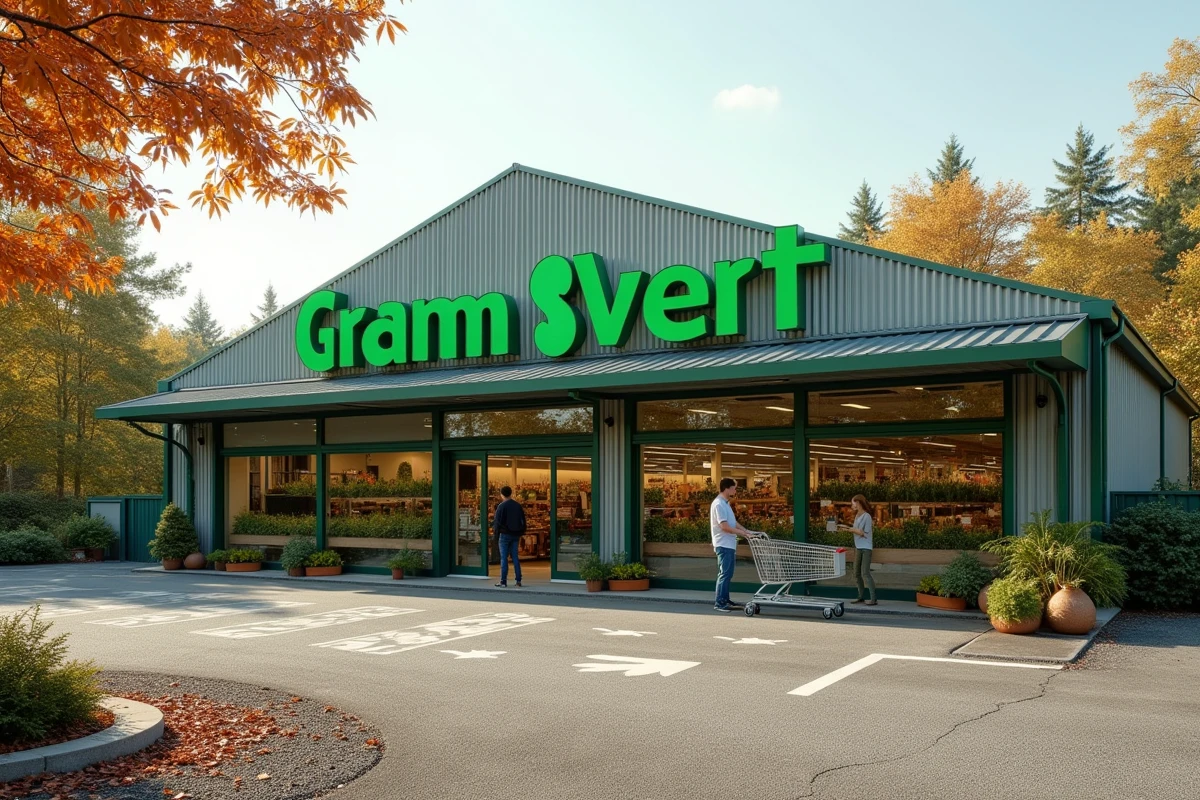
New industrial project for Gamm Vert: the shift to a platform model
The real issue is not so much the identity of the fund as the project it carries. Information relayed by Paysans.org, stemming from presentations made to representatives of cooperatives and franchisees at the end of 2024, outlines a profound transformation of the economic model.
What the plan concretely entails
- Gradual reduction of supplies through French agricultural cooperatives, which historically provided a significant share of the products in stores (seeds, fertilizers, phytosanitary products).
- Increased prominence of private labels controlled by the buyer and imported products, with international sourcing that would allow for compressed purchasing costs.
- Development of marketplaces and direct-to-consumer online sales, repositioning the physical store as a pickup or advisory point, rather than the main sales channel.
The model is shifting from one where the local cooperative supplied the store to one where a centralized platform manages purchases and customer relationships. For a franchisee used to negotiating their assortments with their regional cooperative, this is a change in business.
Tensions between agricultural cooperatives and the new buyer of Gamm Vert
This strategic shift does not come without friction. Feedback on this point varies by region, but several signals converge. According to reports from Paysans.org, unprecedented tensions have emerged between the new buyer and the cooperatives that supplied the network.
The main sticking point: the questioning of the role of cooperatives in the value chain. When a fund decides to substitute imported private labels for products supplied by local cooperatives, it removes from them a commercial outlet built over several decades.
What this changes for franchisees on a daily basis
A Gamm Vert franchisee in the Southwest or Brittany worked with suppliers they knew, with ranges adapted to the local terroir. The shift to a centralized catalog and private labels raises direct operational questions.
- Loss of flexibility in choosing shelf references, particularly in plants and garden care products.
- Risk of standardization of the offer, whereas the strength of the network lay in its local adaptation.
- Uncertainty about future commercial conditions, as the fund has not yet communicated a stable pricing grid to franchisees.
For agricultural cooperatives, the loss of a captive distribution network represents a direct loss of revenue. The cooperative model that has supported Gamm Vert since its inception is being called into question.

Acquisition of Gamm Vert and the Jardiland precedent: what lessons to learn
The garden center sector in France has already experienced a major consolidation movement. In 2018, the Competition Authority authorized the acquisition of Jardiland by InVivo (the parent company of Gamm Vert and Delbard) on the condition of divesting eleven stores to preserve local competition.
At that time, the operation remained within a cooperative framework. InVivo Retail, a subsidiary of a union of cooperatives, consolidated its brands while maintaining ties with the agricultural world. The current acquisition operates in the opposite direction: the exit from the cooperative framework in favor of a financial player.
The Competition Authority had identified risks in several catchment areas during the Jardiland acquisition. One can expect that the change in the nature of the shareholder will raise similar, if not new, questions related to the vertical integration that a platform model with private labels would allow.
The Gamm Vert network remains one of the densest in France in the garden center segment. How this Anglo-Saxon fund will manage the transition, balancing financial profitability and maintaining territorial coverage, will determine whether the stores retain their identity or become standardized points of sale among others.