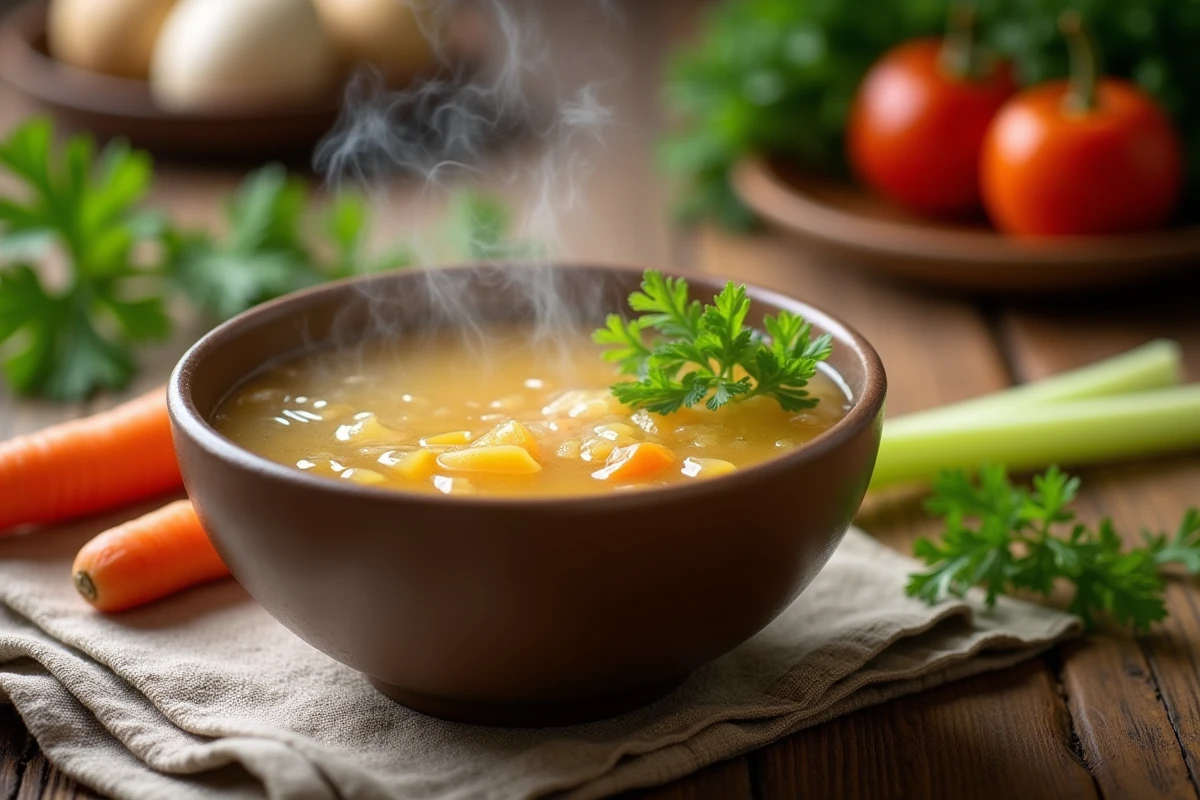
The broth allowed before a colonoscopy is not just any hot liquid. Its composition directly affects the quality of colonic evacuation, and certain common ingredients found in store-bought or homemade broths can compromise the preparation without the patient being aware of it.
Monosodium glutamate and food intolerances: an unknown risk for colonic preparation
Industrial broths, including those labeled “bone broth,” frequently contain monosodium glutamate or yeast extracts rich in free glutamic acid. In patients with undiagnosed glutamate intolerance, consuming these broths in the hours leading up to the examination can cause bloating, abdominal cramps, and accelerated transit even before taking the prescribed laxative.
The problem is twofold. On one hand, these symptoms obscure the assessment of tolerance to the purging protocol. On the other hand, an irritated mucosa due to a reaction to glutamate may retain residues despite proper intake of PEG or sodium picosulfate.
We recommend that patients with recurrent digestive disorders (irritable bowel syndrome, postprandial migraines, intermittent urticaria) inform their gastroenterologist of these histories during the preparatory consultation. A filtered homemade broth, prepared without flavor enhancers or industrial cubes, eliminates this risk factor. A comprehensive guide to compatible liquids is available on La Santé de Demain, with practical tips for making your broth.
Filtered vegetable broth versus chicken broth: selection criteria before colonoscopy
The distinction is not about taste but about residue and fat content. A clear and strained vegetable broth (carrot, green leek removed, celery) is the safest standard for most hospital protocols. The reason is mechanical: residual soluble fibers pass through the fine sieve, and the lipid content remains negligible.

Chicken broth presents a specific problem. Even when degreased after cooling, it retains micro-particles of collagen and emulsified fat that are not always visible to the naked eye. These particles slow gastric emptying and can form a film on the colonic mucosa, reducing endoscopic visibility.
Bone broth, popularized by nutritional trends, amplifies this phenomenon. Its richness in gelatin, free amino acids, and sometimes histamine makes it particularly unsuitable for the strict liquid diet window (the last hours before the examination). Patients who consume it regularly often mistakenly assume it falls into the “clear liquid” category.
Composition to check on the label
- Absence of added fats (butter, oil, cream) and lipid content below the detection threshold on the nutrition label
- No thickening agents (modified starch, xanthan gum, starch) that could leave a deposit on the colonic wall
- No flavor enhancers such as E621 (monosodium glutamate) or yeast extract, especially in patients with atopic or sensitive digestive backgrounds
- Short ingredient list: water, vegetables, salt, possibly filtered aromatic herbs
Residue-free diet and broth: common mistakes in the three days before the examination
The residue-free diet in the three days leading up to the colonoscopy allows strained vegetable broth from the start. Confusion arises on the last day when the patient switches to a strictly liquid diet. At this stage, only a perfectly clear broth is acceptable, which excludes any soup, velouté, or broth containing even tiny pieces.
We observe three recurring mistakes:
- Using a store-bought broth cube without checking for the presence of colorants (caramel E150), added sugars, or hydrogenated vegetable fats that cloud the liquid
- Adding vermicelli or white bread soaked in broth on the last day, while these foods are only allowed during the semi-liquid phase (D-3 to D-2)
- Consuming beef or bone broth thinking it complies with the clear liquid protocol, without rigorous filtration or degreasing
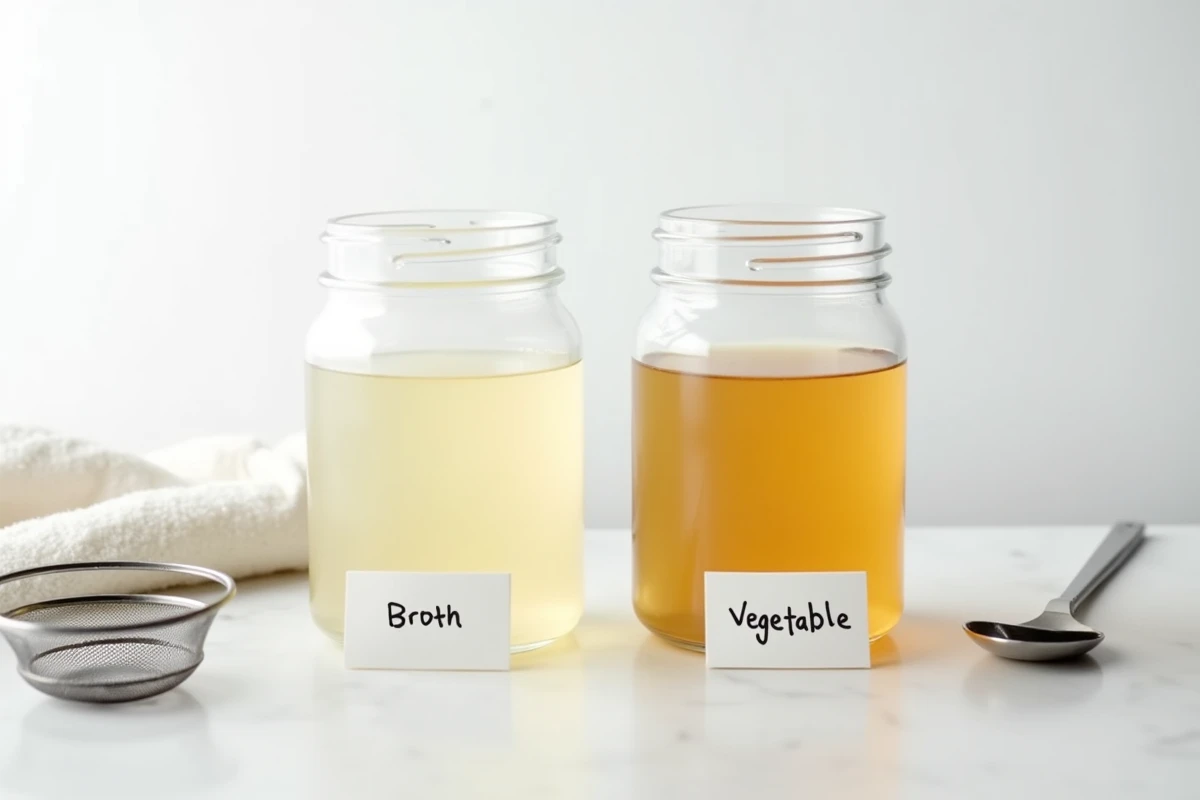
The visual test remains the most reliable: a broth compatible with colonic preparation should allow you to read text through the glass. If the liquid is opaque or cloudy, it is not suitable for the strict liquid diet.
Homemade broth for colonoscopy: recipe compliant with the protocol
The preparation requires no particular culinary skills, but the rigor of filtration makes all the difference in the quality of evacuation.
Simmer peeled carrots, celery stalk, and a white leek (green part excluded) in salted water for an hour. Remove all the vegetables, then strain the liquid through a fine sieve lined with a clean cloth like cheesecloth. Let it cool and remove any trace of fat from the surface.
The resulting broth should be clear and pale yellow. It can be stored in the refrigerator for two days, allowing for advance preparation. Reheat at the time of consumption without adding fat, cream, or pasta.
For patients undergoing a split-dose purging protocol (evening dose, morning dose), alternating hot broth and clear water between doses of laxative helps maintain hydration and gastric tolerance. The broth provides sodium, which plain water does not, reducing the risk of hyponatremia during the purge.
Colonic preparation relies on details that standardized sheets do not always cover: exact broth composition, interactions with food sensitivities, timing of consumption relative to laxative doses. Taking the time to check each ingredient before the colonoscopy remains the simplest action to avoid a repeat examination.