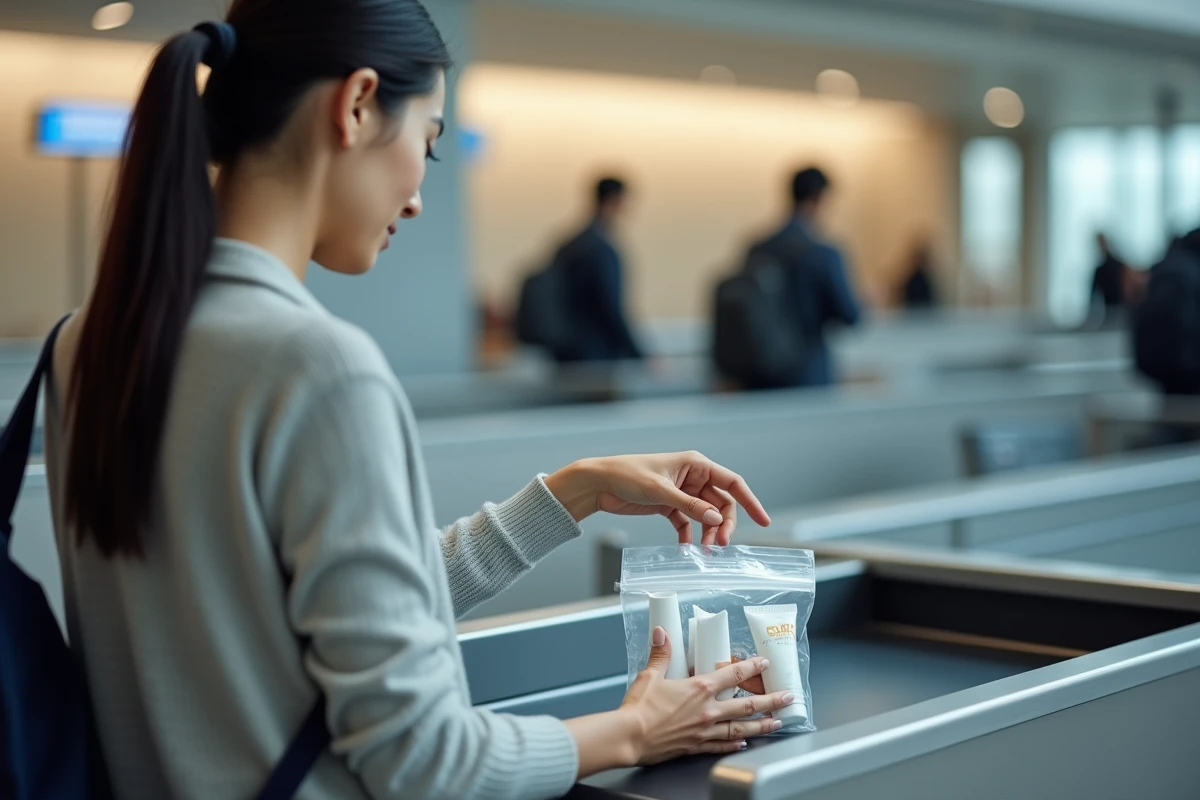
A classic tube of toothpaste is 75 ml. We slip it into the toiletry bag without thinking, yet it is one of the most frequently confiscated items at security checkpoints. Toothpaste is classified as a gel by airport authorities, which subjects it to the same restrictions as creams, shaving foams, or liquid shampoos.
Why toothpaste is a problem at airport security
It’s hard to imagine a tube of toothpaste as a risky item. The issue does not stem from the product itself, but from its consistency. European regulations classify anything that has a partially liquid nature at room temperature as “liquids”: gels, pastes, creams, aerosols, lotions. A tube of toothpaste falls directly into this category, regardless of its brand or composition.
This classification leads to a direct consequence: each container of toothpaste in the cabin must not exceed 100 ml. It is the capacity indicated on the tube that matters, not the remaining amount inside. A half-empty 125 ml tube will be rejected.
One can find information about the regulations on toothpaste in airplanes before departure to avoid unpleasant surprises at the checkpoint, especially when traveling with multiple hygiene products.
Transparent bag and cabin luggage: the concrete rules for toothpaste
The rule of the transparent plastic bag remains the standard in European airports. All liquid products, gels, and pastes carried in the cabin must be gathered in a single resealable bag with a maximum capacity of one liter. Toothpaste takes its place alongside deodorant, moisturizer, and hand sanitizer.
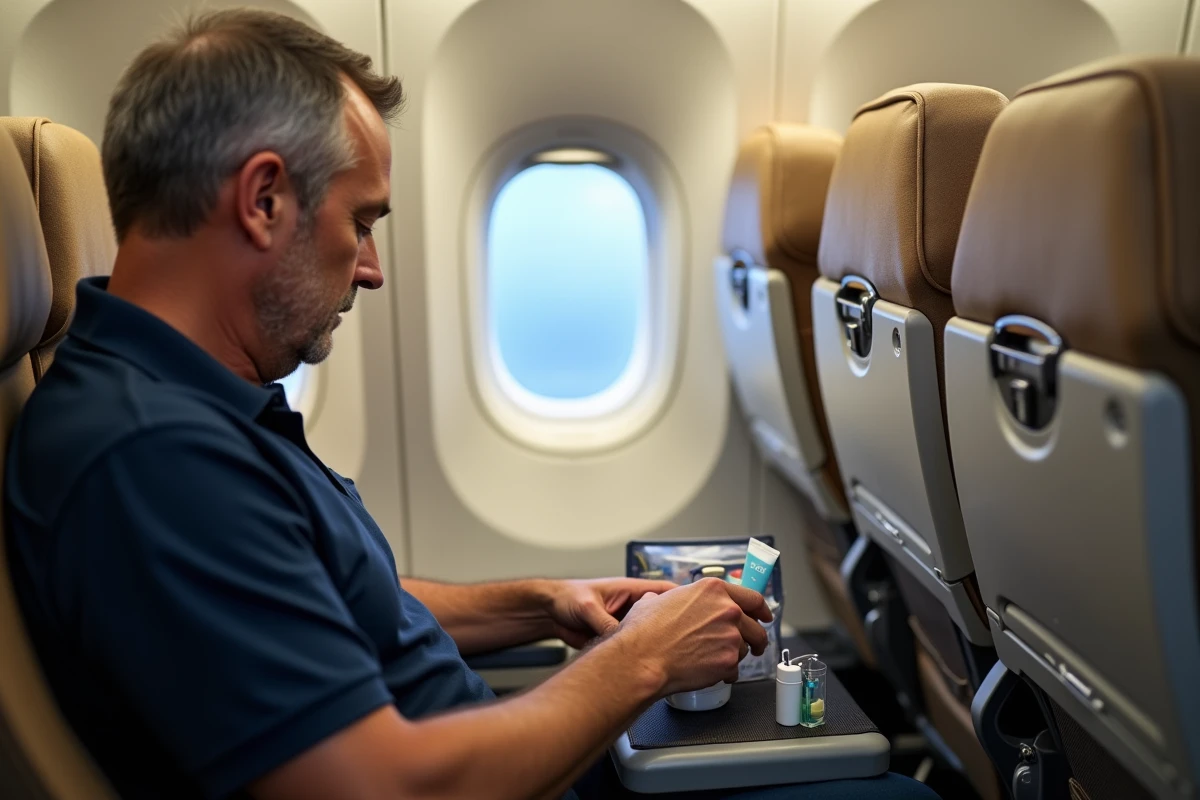
The bag must be able to close. A standard ziplock freezer bag will do the trick. Some airports provide them for free at the security checkpoints, but one cannot rely on this everywhere.
- Each container placed in the bag must not exceed 100 ml of capacity as indicated on the packaging
- Only one bag per passenger is allowed, including for children with their own ticket
- The bag must be taken out of the cabin luggage and presented separately when passing through the scanner
Feedback varies on this point, but some airports equipped with next-generation scanners no longer require the bag to be taken out of the bag. This practice is not widespread, and it is better to keep the bag visible by default.
Solid toothpaste and tablet alternatives: what escapes the liquid rule
Tube toothpaste is not the only option. Solid toothpastes, in the form of chewable tablets or powder, are not classified as liquids. They are therefore not subject to the 100 ml limit or the transparent bag requirement.
In practice, one can slip a jar of toothpaste tablets directly into the cabin luggage without volume restrictions. For travelers who are going with a light bag and an already loaded toiletry kit, this is a real space saver in the famous one-liter bag.
Toothpaste powder works on the same principle. As long as the product is in a dry and non-pasty form, it falls outside the regulated category. Be careful, a toothpaste presented in a compact gel or balm remains a gel in the eyes of security, even if the manufacturer markets it as “solid”.
Transporting toothpaste in checked baggage: limits and practical precautions
In checked baggage, the constraint almost completely disappears. Bottles can reach 500 ml, and the overall limit per bag is around two liters for all liquid and gel products. Therefore, one can carry a family-sized tube of toothpaste without difficulty.
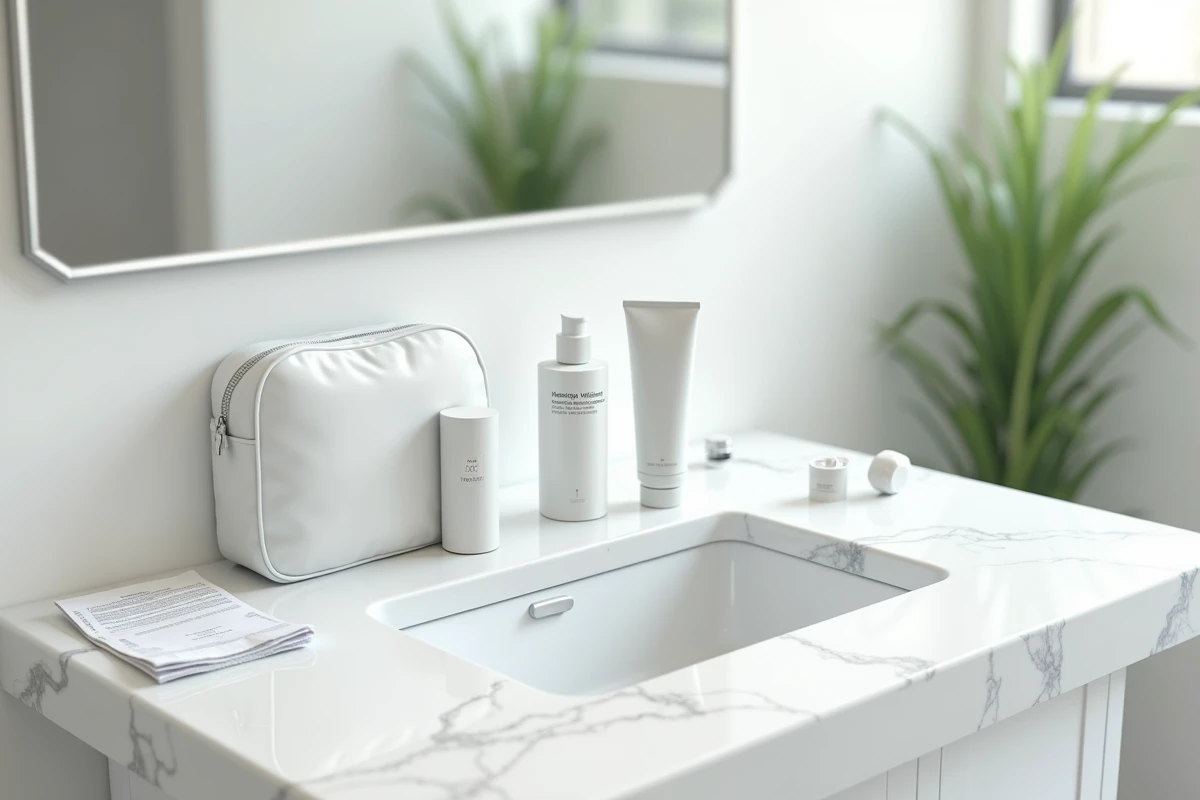
The only operational precaution concerns leaks. The pressurization of the hold can cause leaks if the tube cap is not tightly closed. Packing the toothpaste in a small waterproof plastic bag protects the rest of the luggage. This is not a regulatory requirement, but a reflex that prevents finding your clothes soaked in mint.
Variations between airports and airlines: what changes depending on the journey
The 100 ml per container rule and the one-liter bag are a European standard, but its application varies from airport to airport. Next-generation scanners, capable of analyzing the contents of luggage in three dimensions, allow some airports to relax presentation requirements. The passenger no longer needs to take out their liquids.
This modernization is not uniform. A connecting flight may involve two security checks in two airports applying different practices. One may comply at a departure point and be in violation at a layover.
- Check the specific instructions of each transit airport before departure
- Keep the transparent bag ready even if the departure airport no longer requires it
- For flights outside the European Union, inquire about local regulations that may be stricter
Some airlines impose their own restrictions on the size or weight of cabin luggage, which indirectly reduces the available space for the toiletry kit. Adapting the contents to the allowed bag size remains the best approach.
The most reliable reflex is to leave with a travel-sized tube of toothpaste, a one-liter zip bag, and to keep the large tube in checked baggage. With these three elements in place, passing through security poses no problem, regardless of the airport.