
A tarnished door handle, a candlestick that has turned brown, a mirror frame covered with a matte veil: brass quickly loses its shine when neglected. Before hosting guests, a few targeted actions are enough to restore its golden color. However, it is essential to choose the right method, as not all brass pieces can be cleaned the same way.
Raw, varnished, or plated brass: identify the finish before any cleaning
Have you ever noticed that the same cleaning product yields perfect results on one object but damages another? The reason often lies in the finish of the brass. Before reaching for vinegar or baking soda, take a few seconds to determine what type of surface you are dealing with.
A varnished brass piece should only be cleaned with soapy water. The varnish forms a transparent protective layer. An abrasive product, even a mild one, risks cracking this layer. Oxidation then seeps into the micro-scratches and accelerates tarnishing, exactly the opposite of the desired result.
Plated brass poses a similar problem. The layer of brass is thin: repeated friction or an aggressive cleaner can wear it down to reveal the underlying metal. For this type of piece, opt for gentle washing, a quick rinse, and immediate drying with a microfiber cloth.
Raw solid brass, on the other hand, tolerates acidic homemade recipes. It is on this type of surface that lemon, vinegar, or baking soda yield the best results. A simple test: place a magnet on the object. Solid brass is not magnetic. If the magnet sticks, you likely have ferrous metal plating, and the treatment should remain very gentle.
By following the tips from decoenvogue.com for your home, you will find additional guidelines to adapt the cleaning to each object in the house.
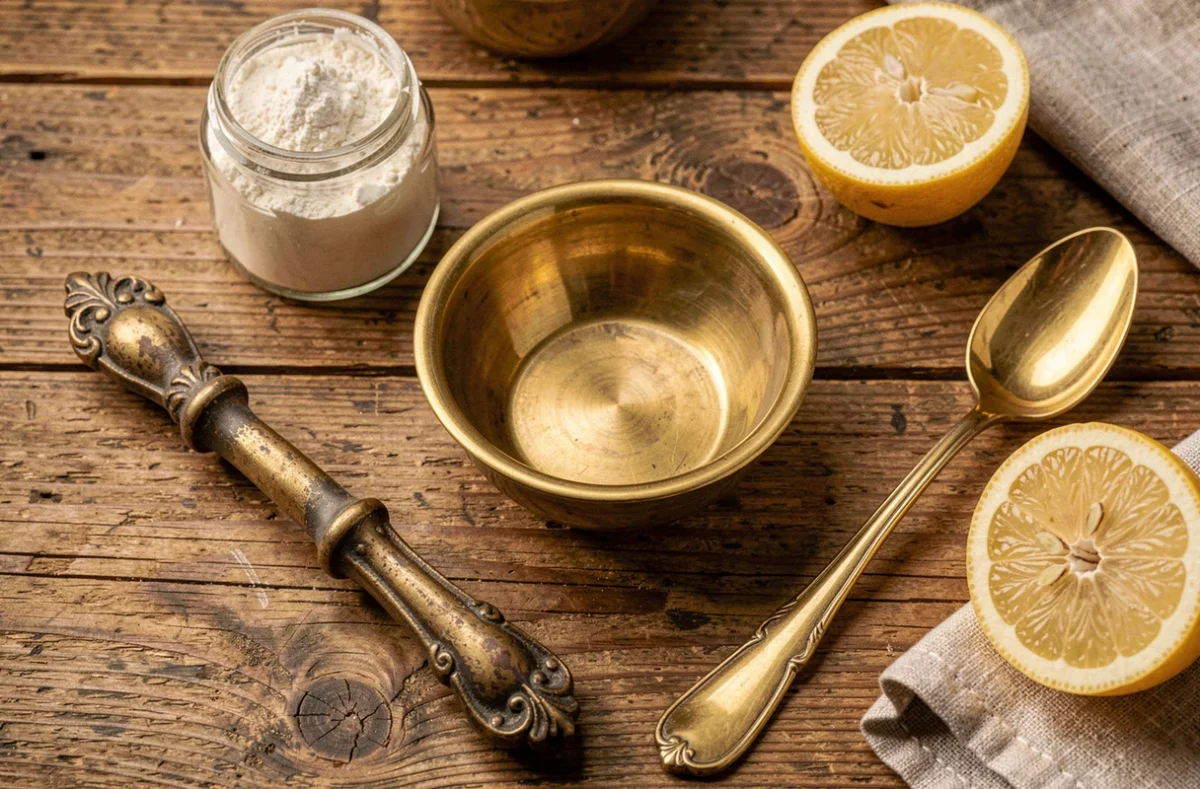
Cleaning solid brass: two homemade recipes that really work
Online guides offer dozens of recipes. Two of them consistently stand out because they combine effectiveness and accessibility.
Lemon and fine salt for light oxidation
Cut a lemon in half. Sprinkle the flesh with a pinch of fine salt. Rub the surface of the brass directly with the half lemon, making small circles. Citric acid dissolves the oxidation veil while the salt acts as a mild abrasive.
Rinse with clear water in the following minutes. Do not let the juice dry on the metal, as the acid would continue to act and could create irregular stains. Dry with a soft, clean cloth.
Baking soda and hot water for stubborn stains
Make a thick paste by mixing baking soda with a little hot water. Apply this paste to the oxidized area using a microfiber cloth. Rub without applying excessive pressure, then rinse thoroughly.
Baking soda neutralizes residual acidity and removes verdigris without scratching the surface, provided a soft cloth is used. An abrasive sponge, even a green one, would be enough to permanently mark the brass.
Common mistakes that tarnish brass instead of reviving it
Some cleaning habits produce the opposite effect of what is desired. Knowing them prevents unpleasant surprises on the day guests arrive.
- Leaving an acidic product (vinegar, lemon) on the surface for too long. Beyond a few minutes, the acid attacks the copper in the alloy and can cause accelerated tarnishing.
- Using a dirty or dusty cloth. Even the slightest particle trapped in the fabric scratches the brass, which is a soft alloy. A clean, dry microfiber cloth remains the best finishing tool.
- Mixing vinegar and salt on plated brass. This duo, effective on solid brass, risks wearing down the surface layer and revealing the underlying metal.
- Forgetting to dry. Water left on brass creates visible rings, especially under direct lighting. Immediate drying after rinsing eliminates this risk.

Protecting the shine of brass after cleaning: wax as a barrier
Restoring brass’s shine is of little use if oxidation returns within a few days. Once the object is clean and dry, apply a thin layer of beeswax or clear furniture wax. The wax creates a barrier between the metal and the surrounding air, significantly slowing down the oxidation process.
Spread the wax with a soft cloth in a very thin layer. A thick layer would yellow and attract dust. Then buff with a second clean cloth until achieving a satin sheen.
For frequently handled objects (door handles, switches), the wax wears off faster. Renewing it every few months maintains the protection. Purely decorative pieces, such as candlesticks or frames, retain their shine much longer between applications.
The right time to clean before a gathering
Plan to clean the day before rather than on the same day. The wax needs a few hours to harden and provide stable protection. Cleaning in the morning for an evening dinner also works, as long as the objects are not handled in the meantime.
A final wipe with a dry microfiber cloth just before the guests arrive is enough to remove any fingerprints. Brass captures the light from candles and lamps like few other materials: a clean surface truly transforms the ambiance of a room.